 comparison
Business Buyer Advantage Alternatives: 7 Top Platforms for 2026
Table of Contents
- Quick Comparison Table: Business Buyer Advantage Alternatives at a Glance
- How We Evaluated Business Buyer Advantage Alternatives
- Business Acquisition Training Programs: Education-First Alternatives
- Deal Sourcing Marketplaces: Where to Find Businesses for Sale
- Due Diligence Software for Business Buyers: Managing the Acquisition Process
- Business Valuation Tools and Seller Financing Business Acquisition Options
- Which Alternative Should You Choose? A Decision Framework
- Post-Acquisition Integration: What Happens After You Buy
Last Updated: July 23, 2026
Quick Comparison Table: Business Buyer Advantage Alternatives at a Glance
| Alternative Type | Best For | Key Strength | Starting Investment |
|---|---|---|---|
| Business Success Training Institute | First-time buyers needing comprehensive education | 180+ lesson plans + live group coaching | Individual lessons or consultation packages |
| BizBuySell | Brick-and-mortar business acquisitions | 45,000+ active listings | Free for buyers |
| Flippa | Online business and SaaS acquisitions | Verified financials and digital asset focus | Free for buyers |
| Axial | Lower middle market M&A ($2.5M-$250M) | Deal flow access + PE network | Contact for pricing |
| DealRoom | Managing complex M&A transactions | Virtual data room + lifecycle management | $1,000/month |
How We Evaluated Business Buyer Advantage Alternatives
We analyzed five key dimensions: buyer type, acquisition stage, deal size, deal flow quality, and learning resources. Most buyers need different tools at different stages, training teaches acquisition thinking, marketplaces show available deals, due diligence software validates purchases. The biggest mistake is treating all alternatives as interchangeable. First-time buyers often skip education, browse marketplaces without understanding valuation, then overpay or get rejected.
Our evaluation focused on real-world utility: Can you move from interested buyer to acquisition owner? Does it fill genuine knowledge gaps or deal flow needs?
Business Acquisition Training Programs: Education-First Alternatives
Training-based alternatives assume you need to learn before you buy. Business Success Training Institute leads this category with 180+ specialized lesson plans covering valuation, negotiation, deal structure, and post-acquisition integration. Unlike generic business courses, these focus specifically on acquisition mechanics: analyzing cash flow, asking the right seller questions, and avoiding common buyer mistakes.
Weekly live group sessions let you ask situation-specific questions and learn from peer experiences. For first-time buyers navigating unfamiliar territory, this peer learning environment matters significantly. Individual business consultation services offer personalized guidance, from basic advice to comprehensive deal support.
What Training-Based Alternatives Offer vs. Marketplace Platforms
Training teaches you how to think. Marketplaces show what's available. These serve different purposes.
Marketplaces give immediate deal flow, 45,000 businesses on BizBuySell today. But most first-time buyers browse listings without understanding what makes a good acquisition. They don't know what cash flow numbers mean or how to spot red flags. Training solves this by teaching valuation and deal structure before marketplace browsing, making the process dramatically more efficient.
The best approach combines both: spend 4-8 weeks in training, then move to marketplace sourcing with actual competence.
Deal Sourcing Marketplaces: Where to Find Businesses for Sale
Marketplaces connect you to sellers and brokers listing companies. The landscape splits into three categories: general small business platforms, specialized online business platforms, and institutional M&A networks.
BizBuySell: The Largest Small Business Marketplace
BizBuySell dominates with 45,000+ active listings across restaurants, retail, service businesses, franchises, and light manufacturing. User-friendly filters narrow by location, industry, revenue, or price. Each listing includes basic financials, description, and seller contact information.
What makes BizBuySell valuable is sheer volume, more listings mean higher probability of finding something matching your criteria. The downside is quality variance. Anyone can list a business, and some are vague or overpriced.
Flippa: Specialized for Online Business Acquisitions
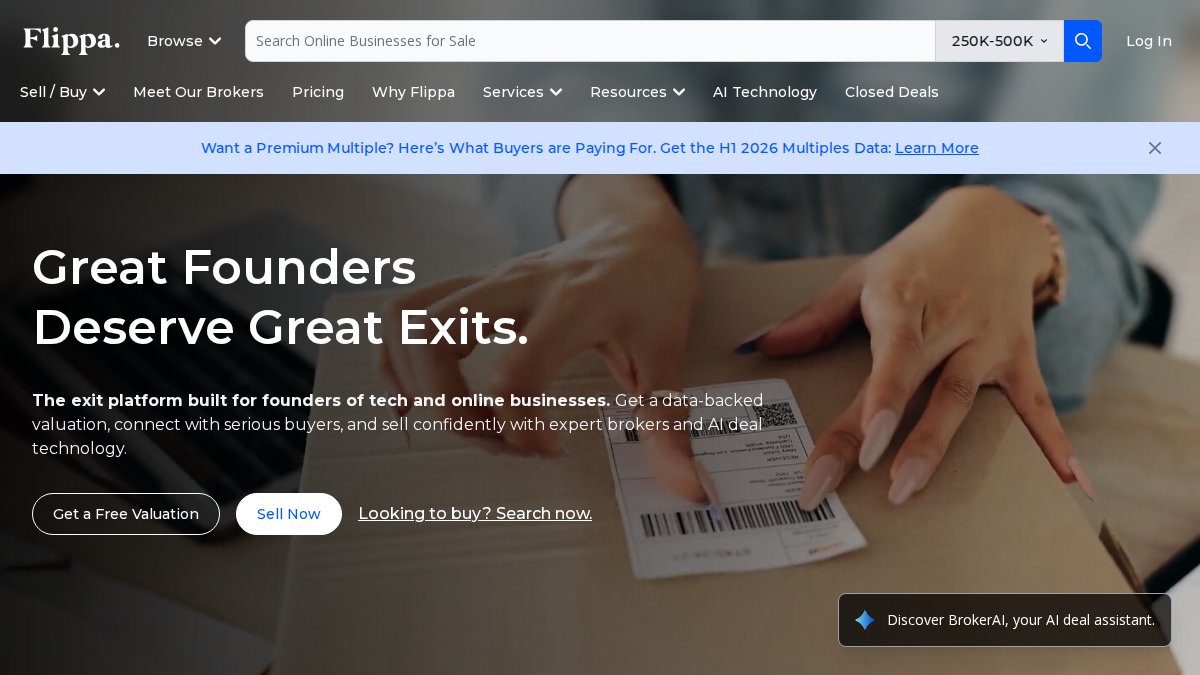
Flippa operates in online businesses, digital assets, and SaaS products. It connects verified financials to listings through Stripe, PayPal, and Google Analytics integrations, so you see actual revenue data, not seller estimates.
Flippa's strength is verification. For online businesses, seeing actual payment processor data is critical. You're not relying on seller claims; you can audit data yourself. This reduces acquisition risk significantly. Buyers pay nothing to browse and make offers, though premium membership ($49/month) provides early access to new listings.
Axial: Lower Middle Market M&A and Deal Flow
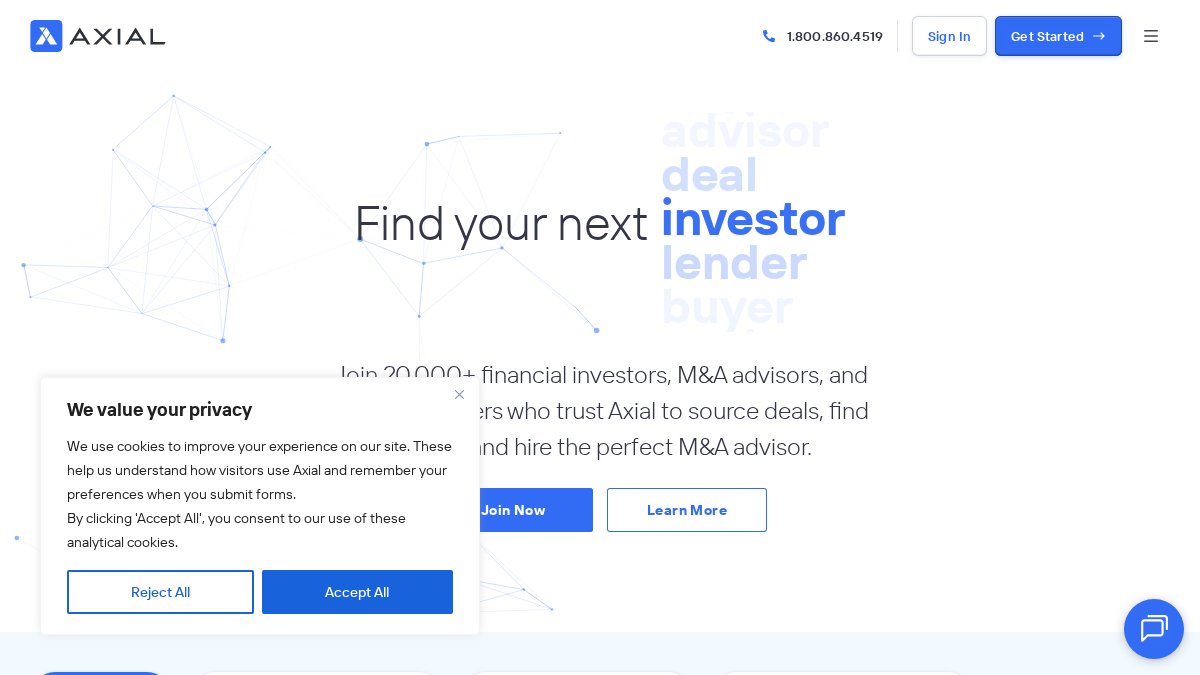
Axial serves private equity firms, independent sponsors, family offices, and corporate development teams hunting lower middle market acquisitions ($2.5M-$250M revenue). If you're a small individual buyer, Axial isn't your platform.
The network connects buyers to sellers and intermediaries through private deal networks. You set investment criteria, and the platform surfaces matching opportunities. Axial's value is deal flow quality and network access, you're connected to pre-vetted deals from brokers and investment banks rather than browsing public listings.
Due Diligence Software for Business Buyers: Managing the Acquisition Process
Once you've found a business and made an offer, due diligence validates everything the seller told you. Poor due diligence leads to buying businesses with hidden problems, undisclosed liabilities, or inflated financials.
DealRoom: Comprehensive M&A Lifecycle Management
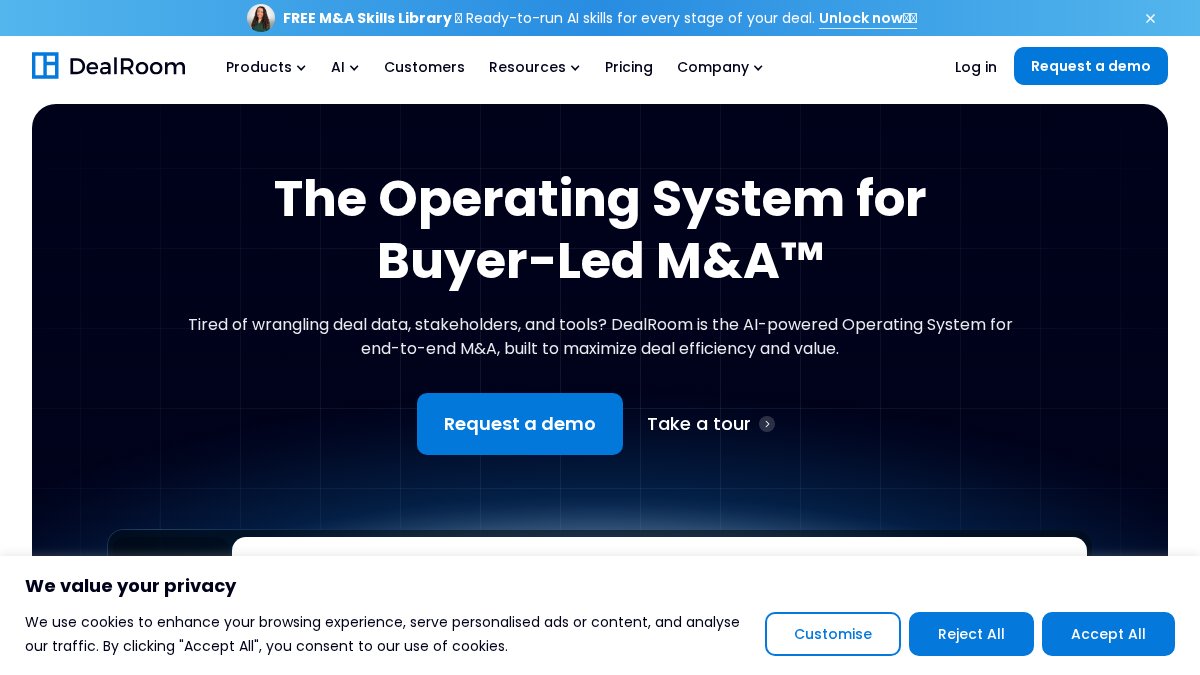
DealRoom is a cloud-based platform for the entire M&A lifecycle: pipeline management through closing and post-merger integration. It functions as a virtual data room, a secure space for confidential documents, plus project management and collaboration tools.
The platform simplifies workflows that would otherwise require email chains and spreadsheets. You upload seller documents, create due diligence checklists, track questions, and coordinate between your team, advisors, and the seller's representatives. Everything lives in one place.
For complex acquisitions involving multiple advisors and extensive document review, DealRoom eliminates coordination friction. For smaller acquisitions, spreadsheets and shared drives work fine. At $1,000/month minimum, DealRoom makes sense for acquisitions large enough to justify the expense, typically $5M+ deals.
Business Valuation Tools and Seller Financing Business Acquisition Options
Two critical elements determine whether you can close an acquisition: understanding what the business is worth and structuring financing that works for both parties.
Understanding Valuation in the Acquisition Process
Business valuation is where most first-time buyers struggle. A restaurant with $200,000 annual profit might be worth $600,000-$800,000 (3-4x profit multiple). A SaaS business with the same profit might be worth $1.5M-$2M (7-10x multiple) because recurring revenue is more valuable.
Most marketplaces provide basic valuation tools. You input revenue and profit, and the tool suggests a valuation range based on comparable sales. This is a starting point, not gospel. Professional valuations require deeper analysis of customer concentration risk, lease terms, employee retention, and competitive positioning.
Seller Financing Business Acquisition: Alternative Capital Structures
Most first-time buyers assume they need bank financing. In reality, seller financing is the most common capital structure for small business acquisitions. The seller provides a loan to the buyer, secured by the business itself.
This works because the seller understands the business better than any bank. A typical arrangement: buyer puts down 20-30% cash, seller finances the remainder over 5-7 years. This works for both parties. The buyer doesn't need to qualify for bank financing. The seller gets a premium price and ongoing income stream.
The risk: if the business underperforms, the seller becomes your creditor. This is why due diligence and valuation matter so much. You need to buy a business strong enough to service seller financing.
Which Alternative Should You Choose? A Decision Framework
Your choice depends on where you are in the buyer journey.

If you're exploring whether to buy a business: Start with training. Business Success Training Institute's 180+ lesson plans and live group sessions let you learn at your own pace while testing your interest.
If you're 3-6 months from making an offer: Combine training with marketplace browsing. Use BizBuySell or Flippa to see what's available at your target price point. This grounds learning in reality.
If you're ready to make offers within 90 days: Marketplace access is primary. You need deal flow. Training becomes supplementary.
If you're evaluating a specific business after making an offer: Due diligence software and professional advisors matter most. DealRoom helps for large deals. For smaller deals, organized spreadsheets and a good accountant/lawyer suffice.
| Buyer Stage | Primary Need | Best Alternative | Secondary Tools |
|---|---|---|---|
| Exploring | Education | Business Success Training Institute | None needed yet |
| Learning (3-6 months out) | Knowledge + Deal exposure | Training + BizBuySell/Flippa | Valuation tools |
| Active (90 days to offer) | Deal flow | BizBuySell or Flippa | Training as needed |
| Post-offer | Due diligence | Professional advisors | DealRoom (for large deals) |
Training + Marketplace Combination Approach
The most effective path for first-time buyers combines education and marketplace access simultaneously. Training teaches you to think like a buyer. Marketplace access grounds learning in reality. You browse actual listings, see what businesses cost, and notice patterns: why similar businesses have wildly different prices, what financials look like for profitable vs. struggling companies, what red flags appear repeatedly.
This combination creates a feedback loop. You learn a concept in training and immediately see examples on the marketplace. Your learning accelerates dramatically. Most serious buyers spend 4-8 weeks in this combined phase: 3-4 hours weekly in training sessions, 2-3 hours weekly browsing marketplaces.
Psychological Barriers First-Time Buyers Face
Most first-time buyers underestimate the psychological challenges. Fear of overpaying is most common. Training programs address this by building competence. When you understand valuation, you're less afraid of overpaying. When you know what due diligence looks like, you're less afraid of hidden problems. Business Success Training Institute's live group sessions normalize these concerns.
Fear of missing out pushes toward hasty decisions. Training and advisors help by explaining that good deals are always available. Missing one deal isn't catastrophic; rushing into a bad deal is.
Imposter syndrome affects many first-time buyers. When you've completed comprehensive training, you have credentials. You've studied what experienced buyers study.
Post-Acquisition Integration: What Happens After You Buy
Most buyer education focuses on finding deals, valuation, and due diligence. But the real work begins after closing. Integration determines whether your acquisition succeeds or fails.
Integration challenges are where acquisitions actually break down. You buy a business, the seller transitions out, employees worry about job security, customers wonder if service will change. You're learning the business while managing these concerns. Cash flow often dips during transition.
Business Success Training Institute's training includes post-acquisition integration guidance. You learn how to retain key employees, maintain customer relationships, identify quick operational improvements, and manage cash flow during transition. Common integration mistakes include moving too fast and disrupting the business, moving too slow and losing momentum, failing to retain key employees, and underestimating working capital needs.
Conclusion
The business buyer advantage alternative you choose depends on your timeline, business type, and learning style. Training programs like Business Success Training Institute build foundational knowledge. Marketplaces like BizBuySell and Flippa provide deal flow. Due diligence software like DealRoom manages complex transactions. Valuation tools help you understand pricing.
Most successful buyers use multiple alternatives in sequence: training first to build competence, then marketplace access to find deals, then due diligence tools and professional advisors to validate acquisitions. This combination reduces risk and accelerates your path to ownership.
Business Success Training Institute offers comprehensive support for every stage of the acquisition journey. Access over 180 specialized lesson plans covering valuation, due diligence, negotiation, financing, and post-acquisition integration. Join weekly live group video sessions where you can ask questions specific to your situation. Work with experienced business consultants who've guided hundreds of acquisitions. Schedule a free initial consultation by video call and discover how acquisition training accelerates your path to business ownership.
Frequently Asked Questions
What are the best business acquisition training programs besides Business Buyer Advantage?
Several alternatives exist depending on your learning style and budget. Training-focused platforms emphasize education through lesson plans and group coaching, while marketplace platforms like BizBuySell and Flippa focus on deal sourcing and deal flow. Some buyers combine both approaches, using training programs to build foundational knowledge in cash flow analysis, valuation, and negotiation tactics, then using marketplaces to find actual acquisition opportunities. Consider whether you need step-by-step guidance on the business buying process or immediate access to available businesses for sale.
Is Business Buyer Advantage worth the cost compared to free resources like SCORE?
SCORE and Small Business Development Centers (SBDCs) offer free or low-cost general business advice, but they typically provide broad guidance rather than specialized business acquisition expertise. Business Buyer Advantage alternatives vary in focus: some offer specialized training in due diligence, valuation, and deal structure; others provide marketplace access to actual listings. Free resources excel at foundational knowledge; paid alternatives often deliver faster, more targeted results if you're actively pursuing a specific business acquisition. The ROI depends on whether you need personalized guidance versus self-directed learning through marketplaces.
What due diligence software for business buyers should I use during acquisition?
DealRoom is a comprehensive platform offering virtual data rooms, Q&A management, and workflow automation for the entire M&A lifecycle. For smaller acquisitions, marketplace platforms like BizBuySell and Flippa include built-in due diligence resources and verified financial data. Many buyers also use spreadsheets combined with professional advisors (accountants, lawyers) for smaller deals. The right choice depends on deal size, complexity, and your comfort level managing documentation. Lower-priced alternatives may suffice for straightforward acquisitions; larger or more complex deals benefit from dedicated due diligence software.
How do seller financing and other alternative financing structures affect business acquisition?
Seller financing (where the seller finances part of the purchase price) reduces reliance on traditional bank loans and can accelerate deal closure. Alternative structures include earnouts (contingent payments based on performance), equity partnerships, or SBA loans. Each structure has different tax implications, working capital requirements, and risk profiles. Training-focused alternatives and business brokers can explain these structures; marketplaces like BizBuySell often highlight seller financing options in listings. Understanding which structure fits your situation, based on your capital allocation strategy and risk tolerance, is crucial for successful business acquisition.
What should I know about post-acquisition integration when buying a business?
Post-acquisition integration determines whether your business acquisition succeeds long-term. Key areas include retaining key employees, maintaining customer relationships, integrating financial systems, and preserving the business model that attracted you. Most training programs and marketplaces focus on the buying process itself; integration planning is often overlooked. Consider consulting with advisors experienced in your specific industry during the acquisition phase to develop an integration strategy. Some alternatives, like DealRoom, include post-merger integration tools, but many buyers need to plan this separately with their team and professional advisors.
This article was written using GrandRanker